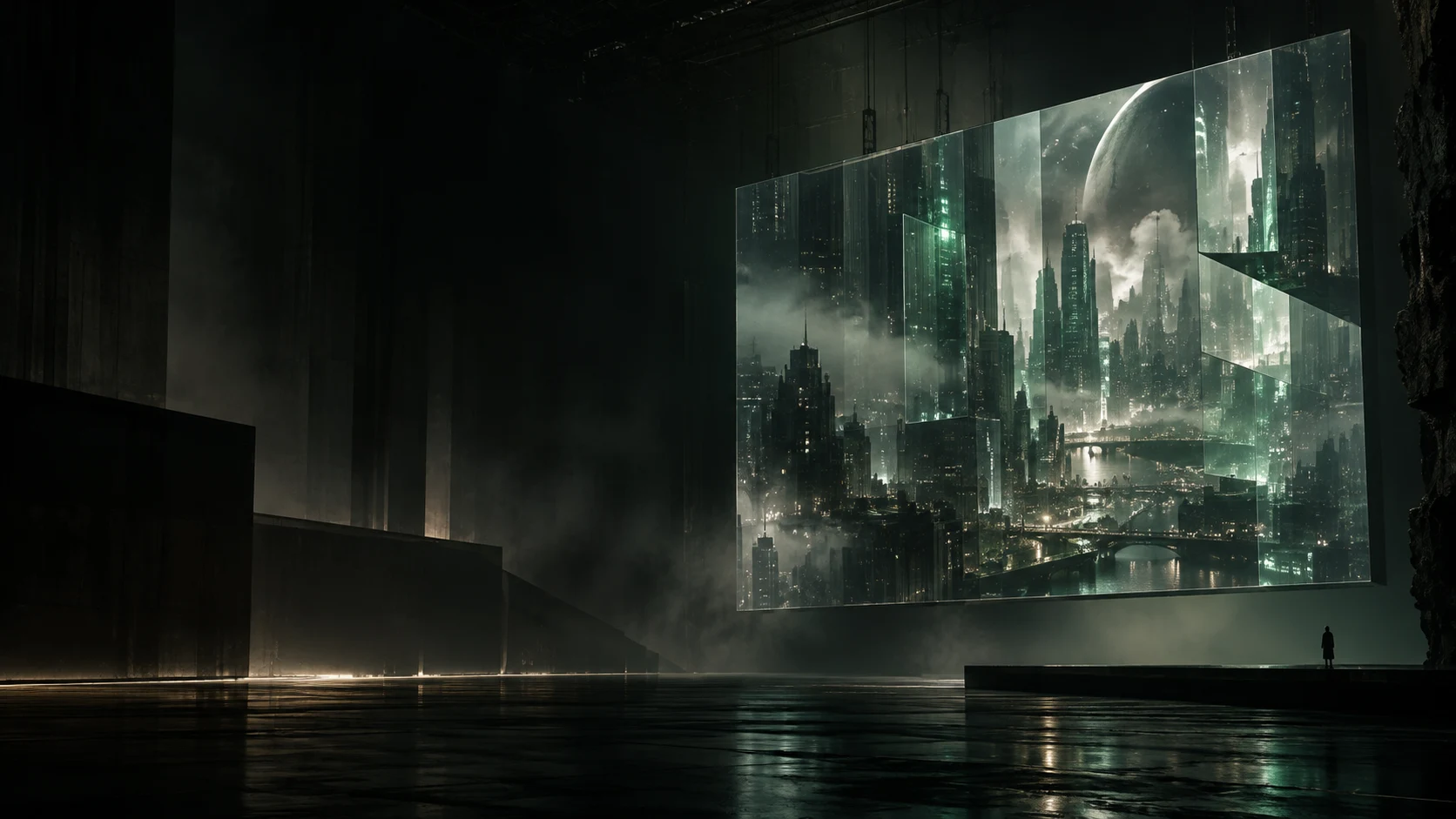
An environment is a promise
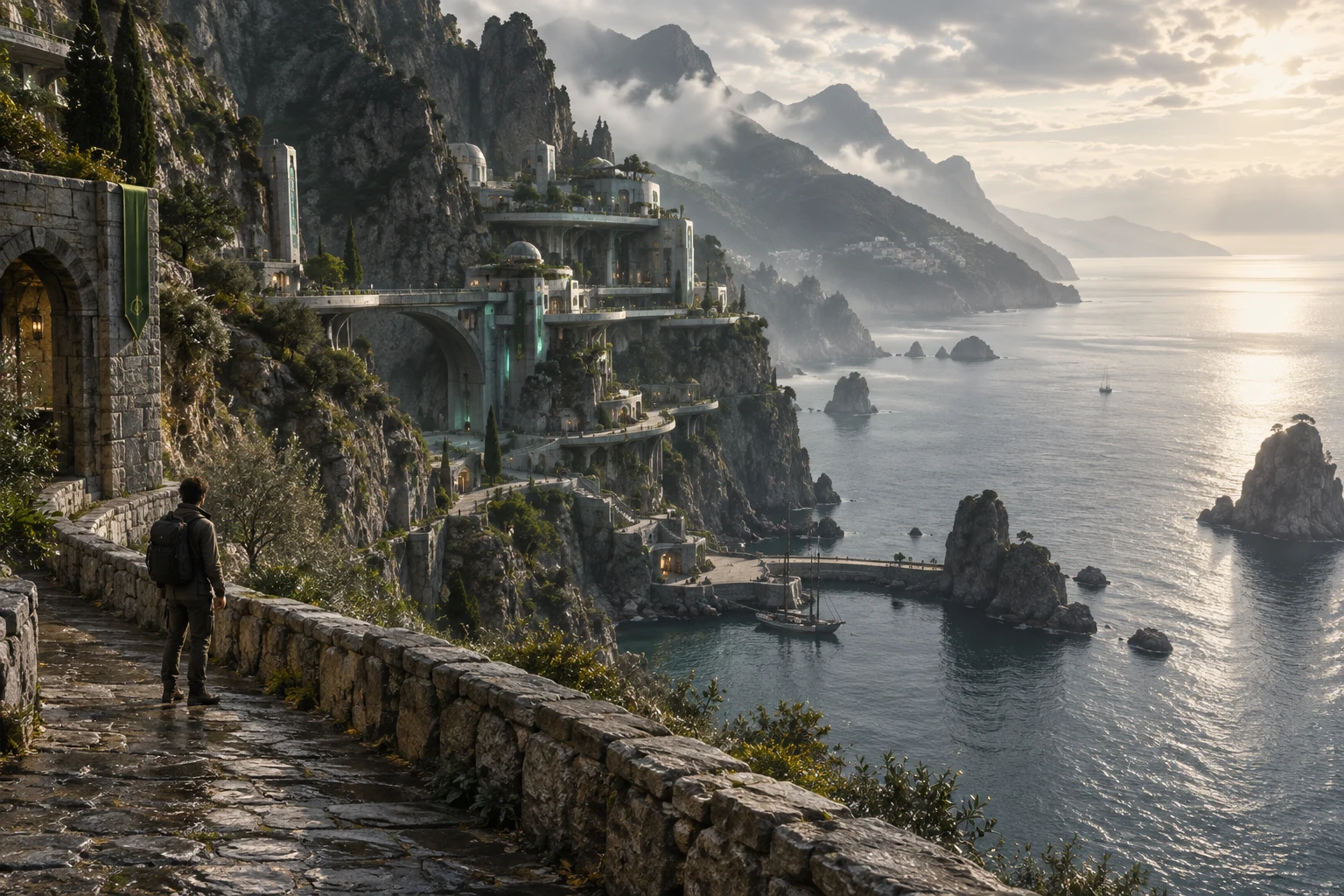
A landscape suggests possibilities before a player presses a button. A lit window invites entry. A bridge implies a destination. A distant figure creates expectation. If the world cannot respond to those expectations, visual richness can become a source of frustration.
Design the first interaction before extending the map. Give the player a legible action, a consequence and a reason to care. A small environment with consistent behavior can feel more alive than a large environment filled with decorative detail.
Separate invention from state
Generative systems can offer variation in dialogue, description or appearance. The underlying state of a game still needs clear rules. What has the player learned? Which doors are open? What promises has a character made? These facts should not drift each time a sentence is generated.
A practical approach is to define a stable world model and allow variation within its boundaries. Test what happens when a player returns, contradicts a character or takes an unexpected path. The quality of recovery matters as much as the quality of the first response.
Think across formats
A film-owned world can provide a setting for an interactive experience, but it needs its own design logic. Repeating a plot through clickable scenes rarely creates meaningful agency. Give the audience a question the film leaves open, or a perspective unavailable to its main character.
Real-time production tools offer one bridge between image-making and playable worlds. Their value lies in iteration: lighting, composition and behavior can be considered together. The final test remains experiential. Does the interaction reveal something that watching alone could not?